
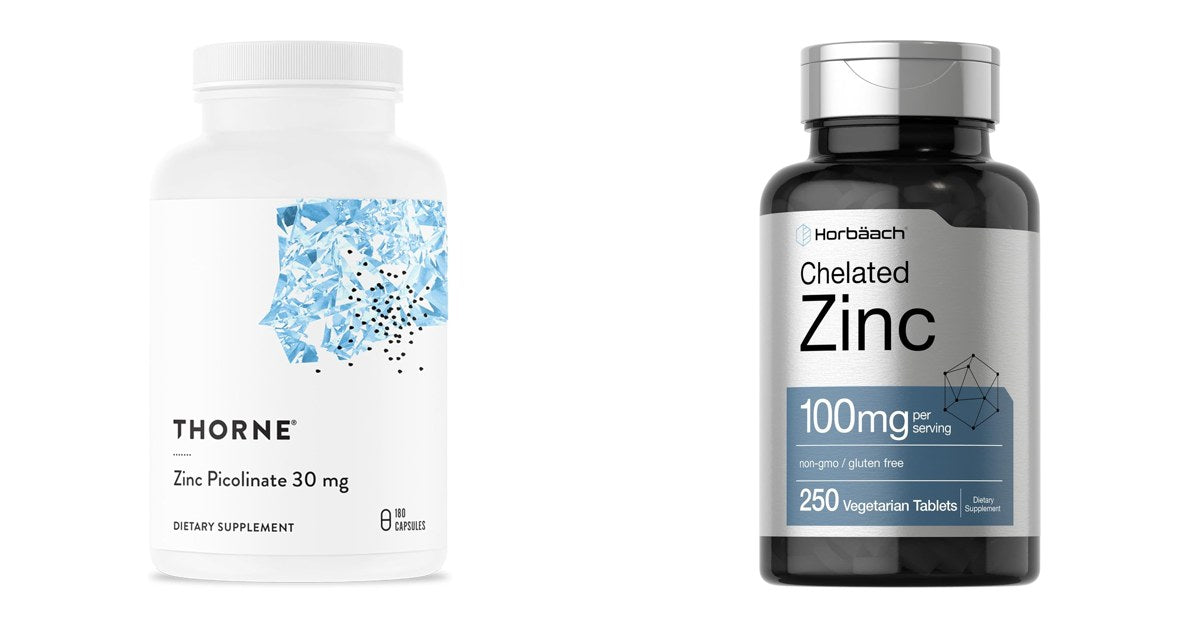
Two zinc bottles can both say “zinc” on the front and mean very different things on the panel: different chemical forms, different serving sizes, and doses that range from a fraction of the Daily Value to many times it. This guide decodes the label itself — the form line, the elemental amount, and the %DV column — using two products from our own shelf whose panels we read line by line. What zinc does in the body is a conversation for you and your clinician; here we only do the label math.
The form is printed in parentheses
Supplement Facts panels name the actual compound in parentheses after the mineral. On Thorne Zinc Picolinate the row reads, as printed: “Zinc (as Zinc Picolinate) 30 mg — 273%”. On Horbäach Chelated Zinc, the front label says “Chelated Zinc” — but the panel row reads “Zinc (as Zinc Gluconate) 100 mg — 909%”. That is the single most useful habit in this guide: the front is naming; the parentheses are the ingredient. The NIH Office of Dietary Supplements zinc fact sheet (updated October 2022) lists sulfate, acetate and gluconate among common supplement forms and states: “It’s not clear whether one form is better than the others.”
The number is already elemental zinc
A useful property of the Supplement Facts format: the milligram figure in the zinc row is the elemental zinc — the zinc itself, not the weight of the whole compound. So “30 mg” as zinc picolinate and “100 mg” as zinc gluconate are directly comparable numbers, even though the underlying compounds weigh more.
%DV is a division you can check yourself
The Daily Value used for zinc on current U.S. labels is 11 mg. Both panels above confirm it if you do the division: 30 ÷ 11 = 273% (Thorne’s printed figure) and 100 ÷ 11 = 909% (Horbäach’s printed figure). When a %DV looks surprisingly large, this is the arithmetic behind it.
Per capsule or per two tablets? Serving size again
Thorne’s panel is built on “Serving Size: One Capsule” — 30 mg per capsule, 180 capsules per bottle. Horbäach’s is built on “Serving Size: 2 Vegetarian Tablets” — 100 mg per two tablets (50 mg per tablet), and the printed “Servings Per Container 125” matches the math: 250 tablets ÷ 2 = 125. Always anchor the dose to the serving line before comparing bottles; our guide to the Supplement Facts panel covers this pattern in depth.
Reference points from the NIH, for context
According to the same NIH ODS fact sheet: the recommended daily amount is 11 mg for adult men and 8 mg for adult women, and the adult daily upper limit is 40 mg from all sources combined — food, drinks, supplements and medications — with the note that this limit does not apply to people taking zinc for medical reasons under a doctor’s care. High-dose products above that line exist on every shelf, including ours; the NIH page connects long-term intakes above the limit with problems such as low copper levels. That is exactly the kind of decision to make with a health professional rather than at the shelf.
Timing notes printed in the NIH fact sheet
The NIH page also lists medication interactions worth knowing about: for quinolone and tetracycline antibiotics it advises taking the antibiotic at least 2 hours before or 4–6 hours after a zinc supplement; for penicillamine, at least 1 hour apart; and it notes thiazide diuretics increase the amount of zinc lost in urine. If any of these are in your medicine cabinet, bring the zinc question to your pharmacist.
Shelf checklist
- Read the parentheses: which zinc compound is it, exactly?
- Anchor to Serving Size: per capsule, or per two tablets?
- Sanity-check the %DV: milligrams ÷ 11 should match the printed percentage.
- Know the NIH reference points: 11/8 mg recommended, 40 mg adult upper limit, all sources combined.
Compare the zinc options in our zinc collection — including single-ingredient capsules and combination formulas such as Nature Made Stress B-Complex with Vitamin C & Zinc, where the zinc row sits alongside other nutrients on the same panel.
This article is general label-reading information, not medical advice and not a statement about what any ingredient does in the body. Dosing needs differ from person to person; talk with your doctor, pharmacist or registered dietitian before starting or changing any supplement, especially if you are pregnant, nursing, taking medication or managing a condition.