
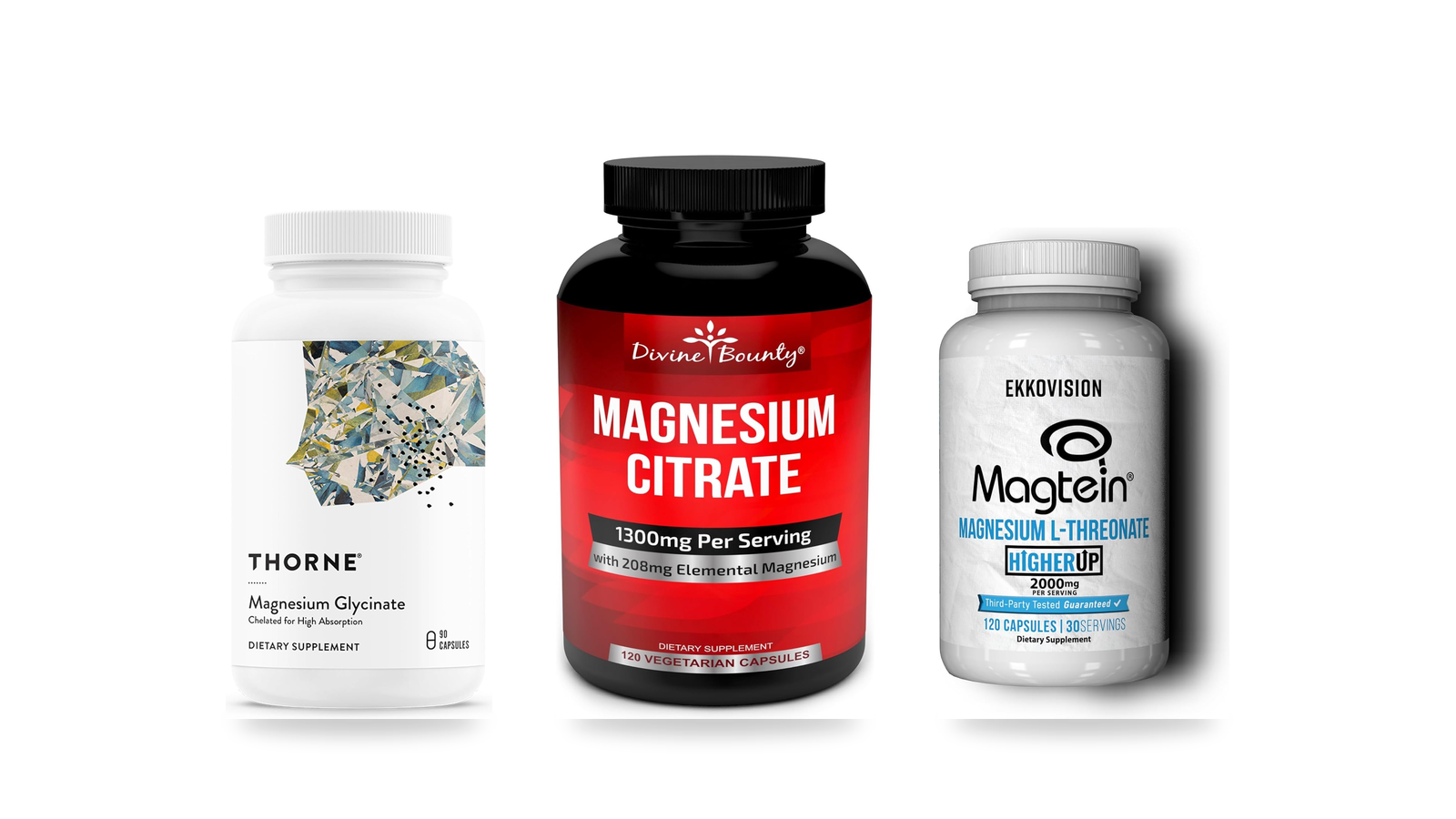
Magnesium is one of the most searched-for minerals on our shelves — and one of the most confusing to shop for. The same aisle can hold glycinate, citrate, oxide and L-threonate, at very different prices and capsule counts. This guide explains, in plain English, what actually differs between the forms and how to pick one that fits your routine.
Why the form matters
Magnesium is never sold on its own: in a capsule it is always bound to another molecule — an amino acid, an organic acid, or oxygen. That partner molecule changes three practical things:
- How much elemental magnesium fits in a capsule,
- How well your body absorbs it, and
- How it feels on your stomach.
The four forms you'll see most often
| Form | What it is | Known for |
|---|---|---|
| Glycinate (bisglycinate) | Magnesium bound to the amino acid glycine, a "chelated" form | Generally gentle on the stomach; a popular pick for evening routines and for people who found other forms harsh |
| Citrate | Magnesium bound to citric acid | Absorbed more completely than oxide according to NIH research summaries; at higher amounts it can have a loosening effect on digestion, which is why some people split their dose |
| Oxide | Magnesium bound to oxygen | Packs the most magnesium per capsule at the lowest cost, but the NIH notes it is absorbed less completely than citrate-type forms |
| L-Threonate | A newer form bound to threonic acid | Often featured in cognitive-support product lines; research is still early, and it typically carries less elemental magnesium per serving at a higher price |
Elemental magnesium: the number that matters
The big number on the front label is usually the weight of the whole compound — not the magnesium itself. For example, one magnesium citrate product in our store lists 1,300 mg of magnesium citrate per serving, which provides 208 mg of elemental magnesium. The Supplement Facts panel always shows the elemental amount, so that's the line to compare between products. If reading those panels feels like decoding, our short guide on how to read a Supplement Facts label walks through it.
How much do adults need?
According to the NIH Office of Dietary Supplements, adult men need about 400–420 mg of magnesium per day and adult women about 310–320 mg — from all sources combined. Food counts first: nuts, seeds, whole grains and leafy greens are rich in magnesium, though national survey data suggest many U.S. adults consume less than the recommended amounts.
One important number for supplement shoppers: the NIH advises that magnesium from supplements should not exceed 350 mg per day unless a healthcare provider recommends otherwise. Magnesium can also interact with some medications, including certain antibiotics and osteoporosis medicines, so check with your doctor or pharmacist if you take prescriptions regularly.
Capsules, gummies or powder?
The form of magnesium matters more than the format it comes in — capsules, gummies and powders can all deliver it. Capsules dominate the magnesium aisle because the doses are precise and the count per bottle is high. If you're weighing formats, we've compared them in Do gummies work as well as capsules?
When to take it
Taking magnesium with a meal is the simplest way to keep it easy on your stomach. Beyond that, consistency beats clock time — pick the moment you'll actually remember. More on timing in Morning vs. night: when should you take vitamins?
Magnesium options in our store
- Thorne Magnesium Glycinate 200 mg — 90 capsules — a practitioner-grade glycinate
- NatureBell Magnesium Glycinate 500 mg — 240 capsules — a bigger-bottle glycinate option
- Divine Bounty Magnesium Citrate 1,300 mg — 120 capsules — the citrate example from this guide
- Ekkovision Magnesium L-Threonate — 120 capsules — the newer threonate form
- Nature Made Calcium, Magnesium & Zinc with D3 — 300 tablets — magnesium as part of a four-mineral combination tablet
You can browse every form we carry in the magnesium collection — free US shipping applies to all of them.
Quick answers
Which form is gentlest on the stomach? Glycinate is the form most often chosen by people who found other types harsh, because the glycine binding is easier on digestion.
Glycinate or citrate for everyday use? Both are well-regarded daily forms. Citrate offers strong absorption at a lower price; glycinate is the usual pick for sensitive stomachs or evening use.
Can I just get magnesium from food? Many people can — a handful of almonds or pumpkin seeds goes a long way. Supplements are a fallback for the gap, not a replacement for magnesium-rich foods.
If you would rather cover several minerals with one bottle instead of choosing a single form, our guide to choosing the right multivitamin for your lifestyle covers that decision.
This article is for general information only and is not medical advice, diagnosis or treatment. Supplements are not intended to diagnose, treat, cure or prevent any disease. Talk to your healthcare provider before starting any supplement, especially if you are pregnant, nursing, taking medication or managing a health condition. Source: NIH Office of Dietary Supplements — Magnesium Fact Sheet.