
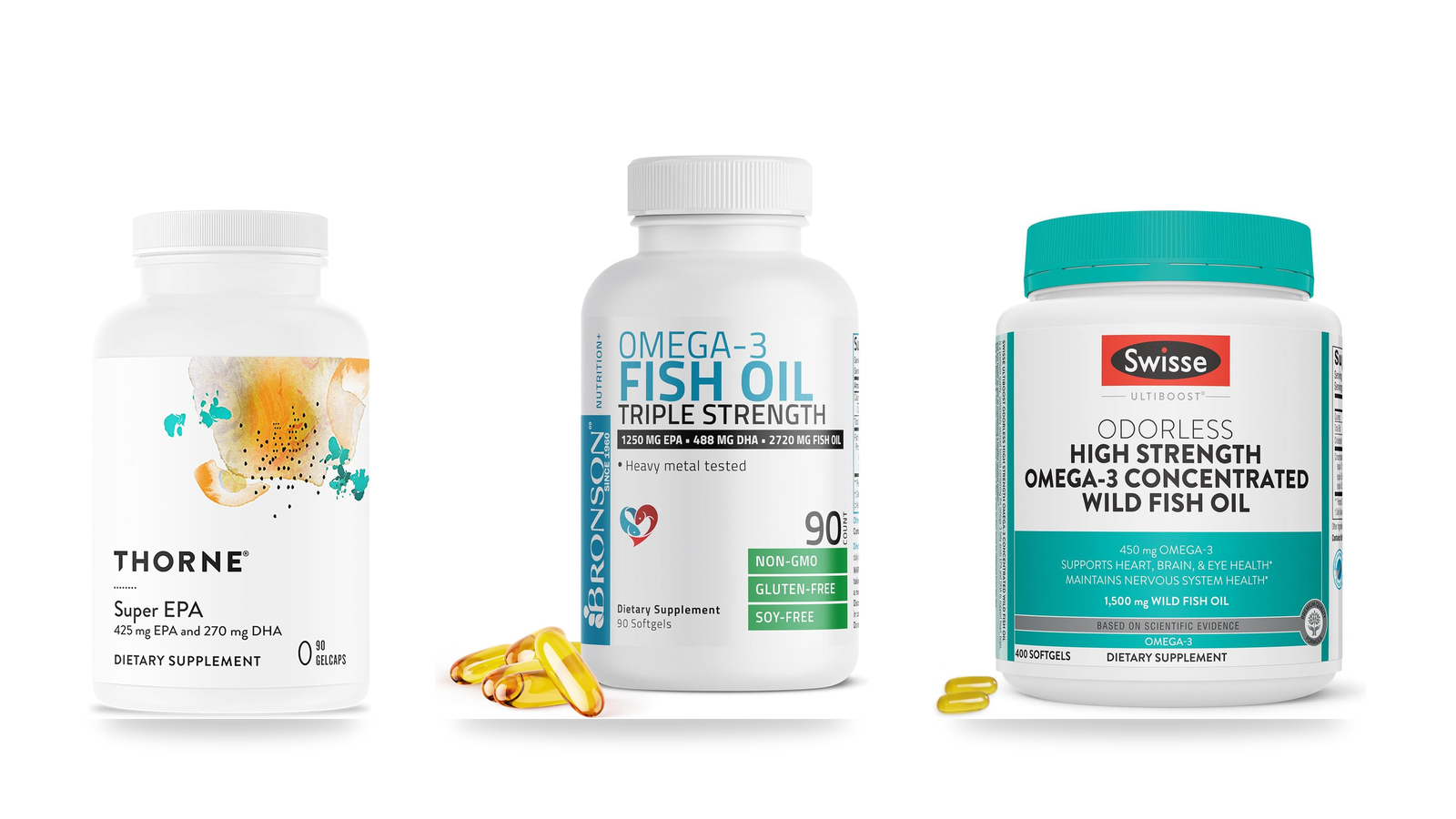
Two bottles sit side by side. One says Fish Oil 1,200 mg, the other Fish Oil 2,720 mg. Neither front label tells you the number that actually matters: how much EPA and DHA — the two key omega-3 fatty acids — is inside each serving. This guide shows you where to find it, using real bottles from our own shelf.
Total fish oil is not total omega-3
The big number on the front of a fish oil bottle is the weight of the whole oil. Only part of that oil is EPA and DHA — the rest is other fatty acids that come along with the fish. The real numbers live in the Supplement Facts panel. Here is the math on four products we stock:
| Product (front label) | Omega-3 per serving | Share of the oil |
|---|---|---|
| Nature Made Fish Oil 1,200 mg | 360 mg omega-3 | ~30% |
| Swisse Wild Fish Oil 1,500 mg | 450 mg omega-3 | ~30% |
| Bronson Triple Strength 2,720 mg | 1,250 mg EPA + 488 mg DHA = 1,738 mg | ~64% |
| Thorne Super EPA | 425 mg EPA + 270 mg DHA = 695 mg | concentrated |
Same aisle, very different concentrations. That's why comparing bottles by the front number alone — or by price per capsule — can point you at the wrong product. If Supplement Facts panels are new territory, start with our guide on how to read a Supplement Facts label.
EPA and DHA in one minute
EPA and DHA are the two omega-3 fatty acids found in fish and other seafood, and they are the forms most supplement research focuses on. Plants offer a third omega-3 called ALA (in flax, chia and walnuts), but according to the NIH Office of Dietary Supplements, the body converts only a small fraction of ALA into EPA and DHA.
How much per day?
There is no official daily recommendation for EPA and DHA specifically — the NIH has set recommended intakes only for ALA (about 1.6 g per day for adult men and 1.1 g for adult women). For supplements, the FDA advises keeping combined EPA and DHA at or below 5 g per day. Most softgels on our shelf supply somewhere between 300 mg and 1,700 mg per serving, so typical use sits far under that ceiling.
One safety note worth knowing: omega-3 supplements can interact with blood-thinning medications. If you take any prescription regularly — especially anticoagulants — check with your doctor or pharmacist first.
What does "triple strength" actually mean?
It isn't a regulated term. In practice it means the oil is more concentrated — more EPA and DHA packed into each softgel, so you swallow fewer capsules for the same intake. The Bronson bottle in the table is a good example: about 64% of its oil is omega-3, versus roughly 30% in standard-strength products. As always, the Supplement Facts panel is the referee, not the marketing phrase.
Softgels or gummies?
Fish oil gummies exist — we stock Nature Made Omega-3 Gummies — and they're a fine option if softgels aren't for you. Just know that gummies usually carry noticeably less EPA and DHA per serving than softgels, so compare panels before deciding. We've written more on this in Do gummies work as well as capsules?
Keep it fresh
Fish oil is sensitive to heat and light — an oxidized softgel is what causes the infamous "fishy burps." Store bottles cool, dark and tightly closed, and prefer "burp-less" or enteric-coated softgels if that's been a problem for you. Our short guide on storing vitamins and supplements properly applies doubly to fish oil.
Omega-3 options in our store
- Nature Made Fish Oil 1,200 mg — 60 softgels — budget-friendly standard strength
- Bronson Triple Strength Omega-3 2,720 mg — 90 softgels — concentrated, fewer capsules per day
- Thorne Super EPA — 90 gelcaps — practitioner-grade concentration
- Swisse Wild Fish Oil 1,500 mg — 400 softgels — bulk bottle for households
- Nature Made Omega-3 Gummies — 90 count — the gummy format
Browse everything, including krill oil options, in the Omega-3 & Fish Oil collection — free US shipping on all of it.
Quick answers
Is 1,200 mg of fish oil the same as 1,200 mg of omega-3? No. In the Nature Made example above, a 1,200 mg softgel provides 360 mg of omega-3. The front number is the whole oil; the panel shows the omega-3.
Which number should I compare between brands? EPA + DHA per serving, from the Supplement Facts panel — then price per bottle divided by servings.
Do gummies deliver the same amount? Usually less per serving than softgels. Neither is "wrong" — just compare the panel numbers and pick what you'll take consistently.
This article is for general information only and is not medical advice, diagnosis or treatment. Supplements are not intended to diagnose, treat, cure or prevent any disease. Talk to your healthcare provider before starting any supplement, especially if you take medication, are pregnant or nursing, or manage a health condition. Source: NIH Office of Dietary Supplements — Omega-3 Fatty Acids Fact Sheet.