
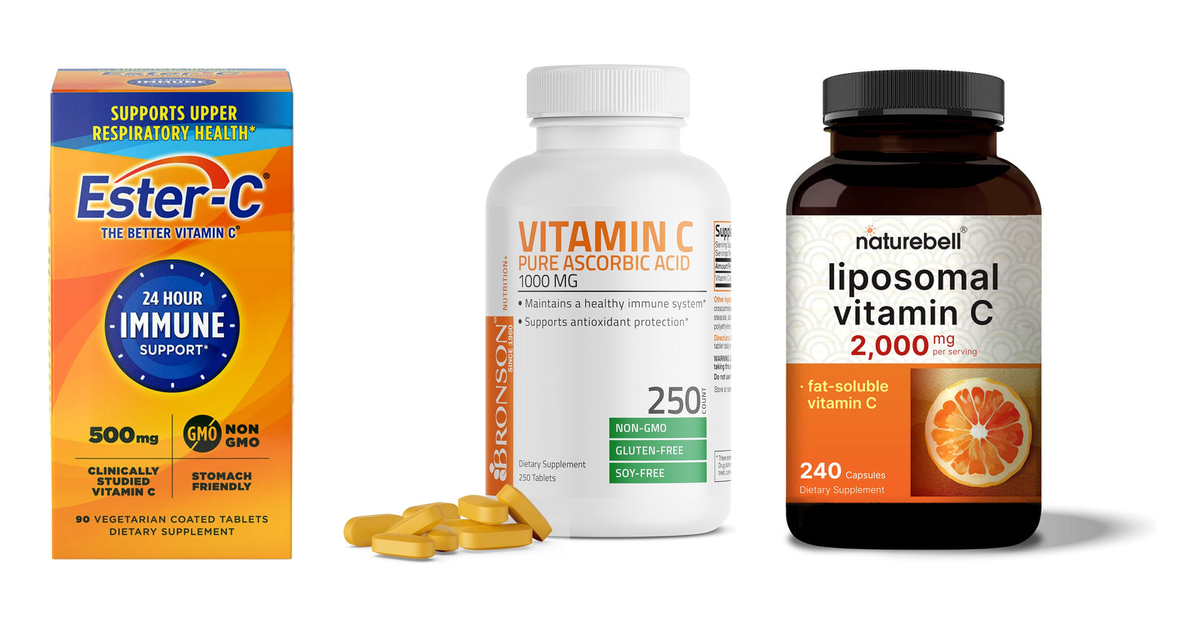
The vitamin C shelf runs from 250 mg gummies to 2,000 mg "liposomal" capsules, with names like ascorbic acid, Ester-C® and calcium ascorbate in between. This guide translates those label words into plain English using the exact bottles on our own shelf — and gives the honest answer to the question big numbers raise: does more milligrams mean more vitamin C in you?
The names on the label
| Label says | What it is | Example from our shelf |
|---|---|---|
| Ascorbic acid | Vitamin C itself — the standard, most common form | Bronson Pure Ascorbic Acid 1,000 mg — 250 tablets |
| Ester-C® / calcium ascorbate | A buffered (non-acidic) form of vitamin C bound to calcium; the box on our shelf is labeled "stomach friendly" | Ester-C 500 mg — 90 coated tablets |
| Liposomal | Vitamin C carried inside tiny fat (lipid) spheres — the label reads "fat-soluble vitamin C" | NatureBell Liposomal Vitamin C 2,000 mg per serving — 240 capsules |
| Chewable / gummy | Same vitamin, friendlier format — usually smaller doses per piece | Nature Made Chewable 1,000 mg · Zero Sugar Gummies 250 mg |
Here is the part the marketing rarely says out loud: according to the NIH Office of Dietary Supplements, research has not shown meaningful differences in how well these forms are absorbed. Pick the format your stomach and routine like — the vitamin is the same.
How much do adults actually need?
The NIH daily recommendation is 90 mg for men and 75 mg for women — people who smoke need about 35 mg more. A bell pepper or an orange already covers a big share of that. The NIH also sets a daily upper limit of 2,000 mg from all sources; staying under it avoids the most common side effect of megadoses, plain old stomach upset.
Why does the label say 1,111% Daily Value?
The FDA's Daily Value for vitamin C is 90 mg. So a 1,000 mg tablet computes to 1,111% DV — the four-digit percentage is normal label math, not a misprint. It tells you the dose is far above the daily need, which leads to the next question.
The megadose question, answered honestly
Your body absorbs vitamin C well at everyday doses: NIH reports roughly 70–90% absorption at intakes of 30–180 mg per day. Above about 1,000 mg, absorption drops below 50%, and the unabsorbed remainder leaves in urine. In plain terms: a 1,000 mg tablet is not "10× the vitamin C in you" compared to a 100 mg dose — it mostly buys convenience and a comfortable margin. If you prefer higher-dose bottles, the 2,000 mg daily ceiling is the number to respect.
If plain vitamin C bothers your stomach
Ascorbic acid is, as the name says, an acid. Buffered forms like calcium ascorbate (the chemistry behind Ester-C) are close to pH-neutral — that is a chemistry difference, not a potency claim, and it is why those boxes say "gentle on the stomach." Coated tablets and taking vitamin C with food work in the same direction.
Picking from the shelf
Browse the full Vitamin C collection or the wider Immune Support range. A practical way to choose: match the dose per piece to your habit (250 mg gummies for a daily nibble, 500 mg coated tablets for a balanced middle, 1,000 mg for one-and-done), then let format and stomach comfort break the tie.
More label guides from this series: Magnesium forms compared · Fish oil labels decoded · Vitamin D3: IU vs mcg.
This guide is general information about reading supplement labels, not medical advice. Vitamin C supplements are not intended to diagnose, treat, cure or prevent any disease. Talk to your healthcare provider about what is right for you, especially if you take medications or have kidney concerns.